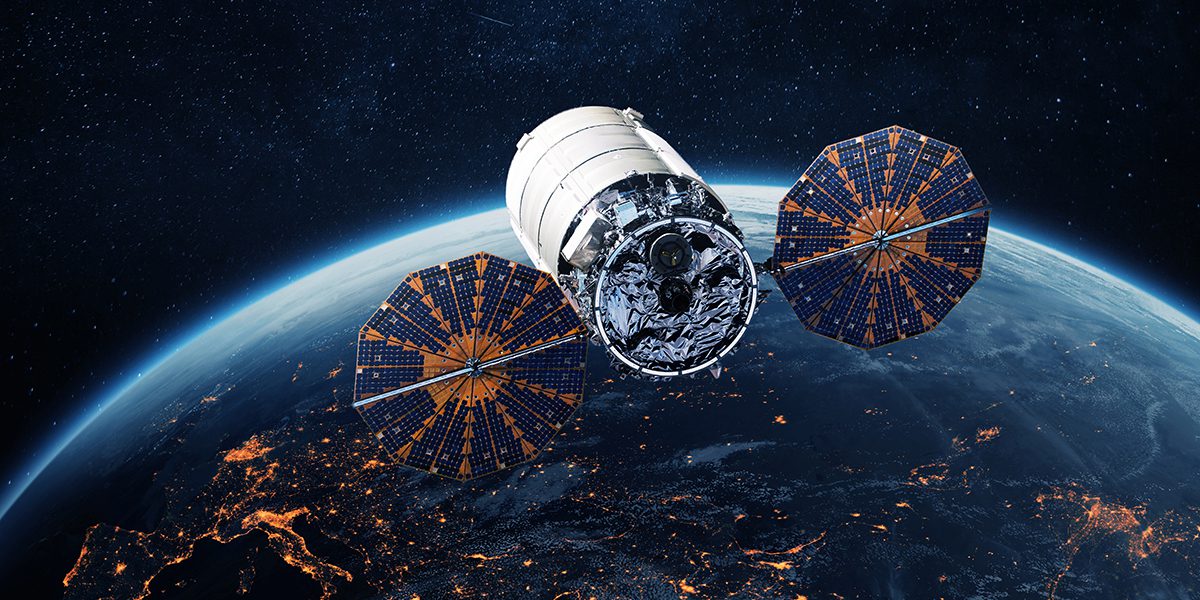
As the space industry continues to grow, manufacturers are facing higher demands than ever for precision, reliability, and performance. From commercial satellite networks to defense systems and deep-space missions, today’s space programs depend on components that can perform in some of the harshest conditions imaginable.
The global space economy surpassed $600 billion in 2024 and many industry analysts expect it to exceed $1 trillion within the next decade. This growth is being driven by satellite communications, Earth observation systems, defense programs, and commercial space ventures. At the same time, satellite launches continue to increase as organizations deploy larger constellations and more advanced space-based infrastructure.
Behind every successful launch is a network of suppliers and manufacturers producing components that must perform flawlessly when failure is not an option. One of the most important capabilities in this process is precision machining.
For organizations in the aerospace and satellite industries, choosing the right machining partner can make the difference between mission success and mission risk.
Table Of Content
What Is Machining for Space and Satellite Programs?
Machining for space and satellite programs involves the precision manufacturing of components used in spacecraft, satellites, launch vehicles, propulsion systems, communications equipment, and scientific instruments.
Unlike standard industrial components, aerospace and space-grade parts must meet extremely demanding requirements.
Common machined components include:
- Satellite structural frames
- Optical mounts
- Sensor housings
- Antenna components
- Propulsion system hardware
- Thermal management assemblies
- Payload support structures
- Guidance and navigation system components
- Launch vehicle hardware
These parts are often manufactured to very tight tolerances and must maintain their exact dimensions during production, launch, and long-term operation in space.
In many cases, a component manufactured today may operate hundreds or even thousands of miles above Earth for years without any chance of maintenance or repair. For that reason, precision is not simply important. It is essential.
What Testing Is Required?
Unlike standard industrial components, aerospace and space-grade parts must meet extremely demanding performance, reliability, and quality standards. Once a component is launched into space, repair or replacement is often impossible. Manufacturers must ensure that every part performs exactly as intended throughout the mission.
Because of this, space-bound components often go through extensive inspection, validation, and testing before they are approved for flight.
Depending on the application, these requirements may include:
Subscribe to Our Newsletter
Dimensional Verification
Space systems depend on precise fit, alignment, and positioning. Components are inspected using advanced measurement equipment such as Coordinate Measuring Machines (CMMs), laser scanners, and precision gauges to verify that every dimension meets specification.
Even small dimensional errors can affect:
- Optical alignment
- Antenna performance
- Thermal management systems
- Propulsion assemblies
- Sensor accuracy
Vibration and Launch Simulation Testing
Before reaching orbit, spacecraft components must survive the intense forces created during launch.
Qualification testing often includes:
- Random vibration testing
- Sinusoidal vibration testing
- Shock testing
- Acoustic testing
These tests recreate the forces experienced during launch and ascent, helping engineers identify weaknesses before liftoff.
Thermal Vacuum Testing (TVAC)
Thermal vacuum testing is one of the most common environmental tests used for satellite hardware.
Components are placed inside specialized chambers that simulate:
- The vacuum of space
- Extremely hot temperatures
- Extremely cold temperatures
- Repeated thermal cycling
This testing helps confirm that materials and assemblies will continue to operate correctly despite major temperature changes in orbit.
Material Certification and Traceability
For many aerospace and defense programs, every piece of raw material must be traceable to its original source.
Manufacturers are often required to maintain documentation that includes:
- Material certifications
- Heat lot numbers
- Inspection records
- Manufacturing processes
- Quality control data
This level of traceability helps engineers confirm compliance and investigate future issues more quickly if they occur.
Surface Integrity and Finish Validation
Surface quality can have a major impact on component performance.
Depending on the application, manufacturers may need to verify:
- Surface roughness
- Flatness
- Coating adhesion
- Burr-free edges
- Critical sealing surfaces
For satellite assemblies, poor surface finishes can affect thermal performance, assembly accuracy, and long-term durability.
Non-Destructive Testing (NDT)
Many flight-critical components undergo non-destructive inspections that evaluate internal and external integrity without damaging the part.
Common methods include:
- Dye penetrant inspection
- Ultrasonic testing
- X-ray inspection
- Computed tomography (CT) scanning
- Magnetic particle inspection
These techniques help identify cracks, voids, inclusions, and other defects that may not be visible during a standard visual inspection.
Mission Reliability Requirements
Perhaps the greatest challenge in space manufacturing is reliability. A machined component may need to operate continuously for 10, 15, or even 20 years without maintenance while being exposed to radiation, extreme temperatures, and the vacuum of space.
Because failures can cost millions of dollars, manufacturers must focus on getting every component right the first time. This requires strong process control, repeatable results, thorough documentation, and strict quality assurance throughout production.
Why Space Creates Unique Manufacturing Challenges
Manufacturing for space applications is very different from machining parts that will be used on Earth. Once a component leaves the ground, it must perform reliably in conditions that go far beyond what most commercial equipment will ever experience.
Extreme Temperature Fluctuations
Spacecraft and satellites regularly experience severe temperature swings as they move between direct sunlight and the darkness of space. Depending on their orbit and exposure, temperatures can range from approximately -150°C to more than 120°C.
These temperature changes cause materials to expand and contract, creating stress on components and assemblies. Even small dimensional inconsistencies introduced during machining can become major performance problems once a part is exposed to these conditions.
Launch Vibration and Shock
Before reaching orbit, every space-bound component must survive the intense forces of launch.
Rocket launches expose structures to:
- High vibration loads
- Acoustic stress
- Rapid acceleration
- Mechanical shock
A component may appear fully functional during inspection but still fail if it contains microscopic defects, areas of high stress concentration, or dimensional inconsistencies that become critical during launch.
Vacuum Environments
The vacuum of space creates challenges that do not exist on Earth.
Materials must be evaluated for:
- Outgassing characteristics
- Dimensional stability
- Long-term performance
- Compatibility with nearby systems
Because of these requirements, manufacturing quality, surface integrity, and material selection become even more important.

Radiation Exposure
Satellites and spacecraft must also withstand long-term exposure to radiation, which can gradually degrade materials and systems.
Engineers and manufacturers must consider durability and reliability throughout the entire mission to ensure components continue to perform as expected over time.
Materials Commonly Used in Space Manufacturing
The harsh environment of space requires materials that provide an exceptional combination of strength, durability, and low weight.
Aluminum Alloys
Aluminum remains one of the most widely used materials in aerospace because it offers an excellent strength-to-weight ratio while remaining relatively easy to machine.
Popular aerospace grades include:
- 6061
- 7075
These materials are commonly used for structural components, housings, and support systems.
Titanium Alloys
Titanium is often used when engineers need:
- High strength
- Corrosion resistance
- Reduced weight
However, titanium can be difficult to machine because it generates significant heat and causes increased tool wear. Successfully machining titanium requires specialized expertise and careful process control.
Stainless Steel
Many satellite and spacecraft systems use stainless steel components in critical structural and mechanical applications where strength and reliability are essential.
High-Performance Alloys
Some programs also use advanced materials such as:
- Inconel
- Nickel-based superalloys
- Specialized aerospace metals
These materials are valued for their performance in demanding environments, but they are often much more difficult to machine than traditional metals.
Producing high-quality parts from these materials requires advanced equipment as well as extensive machining knowledge and experience.
Common Machining Challenges in Space and Satellite Programs
Challenge #1: Maintaining Tight Tolerances
Space systems often depend on precise alignment between multiple components.
Even small dimensional variations can negatively affect:
- Optical systems
- Communication equipment
- Guidance systems
- Sensor performance
- Mechanical interfaces
Many aerospace applications require tolerances measured in thousandths of an inch or even smaller. Achieving this level of consistency requires advanced CNC equipment, strong quality processes, and experienced machinists.
Challenge #2: Lightweighting Without Sacrificing Strength
Every pound launched into orbit adds cost. While reduced launch costs have helped drive growth across the space industry, payload weight remains a major design consideration.
As a result, engineers constantly look for ways to reduce weight through:
- Thin-wall structures
- Pocketed designs
- Complex geometries
- Material optimization
These lightweight designs often create manufacturing challenges because thinner sections are more likely to vibrate, distort, or deform during machining.
Challenge #3: Surface Finish Requirements
Many space components require carefully controlled surface finishes to function properly.
Surface quality can affect:
- Thermal performance
- Assembly fit
- Wear characteristics
- Optical performance
- Mechanical reliability
Achieving these finishes consistently requires advanced tooling, proven machining strategies, and tightly controlled manufacturing processes.
Challenge #4: Traceability and Documentation
Space and aerospace programs often require extensive documentation throughout the manufacturing process.
Requirements frequently include:
- Material certifications
- Inspection data
- Process records
- Manufacturing traceability
- Quality documentation
Maintaining this level of accountability is critical in highly regulated industries where every component must be inspected, documented, and verified.
The Growing Importance of Advanced CNC Machining
The rapid growth of satellite programs and the increasing complexity of aerospace systems continue to drive demand for advanced manufacturing technologies.
Industry trends point to continued growth in satellite deployments, including large constellations and increasingly advanced small satellite platforms. Smallsats represented approximately 97% of spacecraft launched in 2023, highlighting the industry’s move toward high-volume, highly engineered space systems.
To support these changing requirements, manufacturers are increasingly relying on advanced technologies and processes.
Multi-Axis Machining
Advanced multi-axis CNC equipment makes it possible to produce highly complex geometries while reducing setup time and improving overall accuracy.
Precision Inspection
Modern inspection technologies help verify dimensional accuracy and ensure compliance with strict customer requirements.
Digital Manufacturing Processes
Integrated CAD/CAM workflows and optimized manufacturing processes improve consistency, reduce risk, and support faster production schedules.
Together, these technologies help manufacturers meet the growing demands of modern space programs.
What Aerospace Manufacturers Should Look for in a Machining Partner
Because space applications are so demanding, manufacturers should carefully evaluate machining partners based on several important factors.
Technical Expertise
Can the supplier successfully machine aerospace-grade materials while maintaining critical tolerances?
Space components often require tight dimensional control, complex geometries, and specialized materials. A qualified machining partner should have proven experience producing precision parts that meet aerospace standards.
Quality Systems
Does the supplier have the inspection capabilities and documentation processes needed to support aerospace requirements?
Quality systems should include advanced inspection equipment, documented procedures, and strong process controls to ensure consistent results and full traceability.
Scalability
Can they support both prototype development and production manufacturing?
Many space programs begin with low-volume prototypes and eventually move into larger production runs. Manufacturers should look for partners that can support projects throughout the entire product lifecycle.
Collaboration
Are they willing to work closely with engineering teams to improve manufacturability and reduce production risk?
Strong communication between engineering and manufacturing teams can help identify potential issues early, improve production efficiency, and support better overall results.
Reliability
Can they consistently deliver high-quality parts on schedule?
Meeting delivery deadlines is critical in aerospace programs where launch schedules, program milestones, and customer commitments often depend on parts arriving on time.
For mission-critical applications, these capabilities are not simply beneficial. They are essential.
How Winndeavor Supports Space and Satellite Manufacturing Programs
Manufacturing for space applications requires more than machining capability alone. It requires a commitment to precision, consistency, and quality throughout every stage of production.
Winndeavor helps customers meet demanding aerospace requirements through:
Precision Manufacturing
Complex geometries and tight-tolerance components require machining processes designed to deliver consistent accuracy and reliable performance.
Expertise With Difficult Materials
Aerospace materials often present significant manufacturing challenges. Successfully machining these materials requires technical expertise, process discipline, and a deep understanding of material behavior.
Quality-Focused Processes
Thorough inspection and validation processes help ensure components meet exact specifications while supporting customer quality requirements and compliance standards.
Engineering Collaboration
Early collaboration during the manufacturing process can help identify opportunities to improve manufacturability, reduce production risk, and enhance component performance.
Dependable Execution
When launch schedules and program milestones are on the line, manufacturers need suppliers that can consistently deliver quality parts with reliable turnaround times.
Precision Manufacturing Is Mission Critical
The future of the space industry will depend on increasingly advanced satellites, launch systems, and spacecraft. As missions become more ambitious and hardware becomes more complex, the importance of precision machining will continue to grow.
Space leaves almost no room for error. Components must survive launch, withstand extreme environmental conditions, and operate reliably for years without maintenance. Every machined surface, dimension, and material characteristic plays a role in mission success.
By combining advanced manufacturing capabilities, precision machining expertise, strict quality processes, and close engineering collaboration, Winndeavor helps aerospace and satellite manufacturers build confidence into every mission-critical component.
The result is simple: precision on Earth that delivers reliable performance in space.